Prior to mechanical harvesting, cane cutting was seasonal work with the influx of men to the Mackay district during the months from May to November each year for the period of time that the “crushing” took place in the cane fields. These men needed to be housed and fed for the long days they spent doing hard physical labour. The cane farmer provided accommodation in cane barracks with the wives and daughters of farm owners or managers providing early breakfasts and late dinners. It is not true that cane cutters did not wear shoes. They wore sand-shoes on their feet.
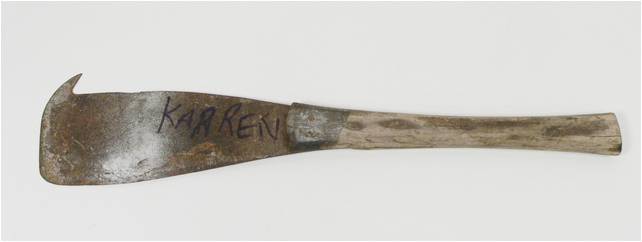
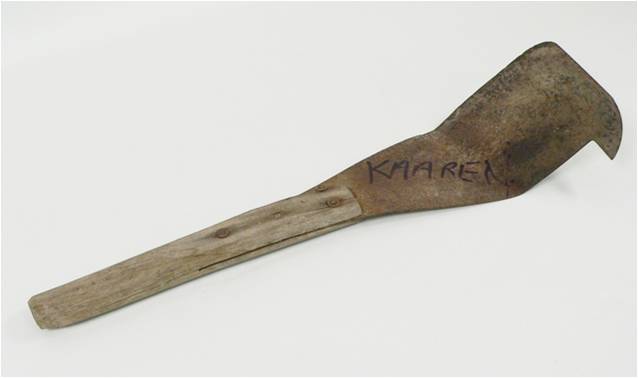
The hard physical labour meant blisters on the hands for the first three weeks until the skin hardened to take the constant use of a cane knife. A number of remedies were used to alleviate the blisters but it was largely a matter of waiting for the calluses to build up on the skin. There were at least two different types of cane knives; one was a cutter that had a bent blade and the other was a topper that had a longer straight blade. The cutter was used to cut the cane off at the ground level after the cane had been burnt at sunset the night before, and the topper was used by the men to cut the tops from the cane prior to loading the bins for transporting by loco (sugar train) to the sugar mills. In the early days of the industry, horses were used to transport sugar cane to mills. The reason given at the time for burning the rubbish from around the cane was to increase the sugar content; add nutrients in the soil as well as to clear the cane of any pests such as taipan snake and rats. Harvested cane is now cut green without the need for burning the cane.
Technological change has allowed for the development of mechanical equipment to assist farmers. The first patent lodged for a mechanical cane harvester was in 1958 by Fields Pty Ltd of Mackay. Hodge Industries also of Mackay developed a range of patented mechanical equipment with creative inventions still being developed. The farming industry has become computerised to allow a single farmer to manage a cane farm with the aid of mechanical harvesters and tractors that have sensors and GPS navigational aids.
 Mia Mia